Getting Around Nicaragua: Shared Shuttle, Public Bus or Private Transfer?
Public bus, shared shuttle or private transfer? Compare the connections, costs and effort involved in mainland Nicaragua, with honest advice on when convenience is worth paying for.
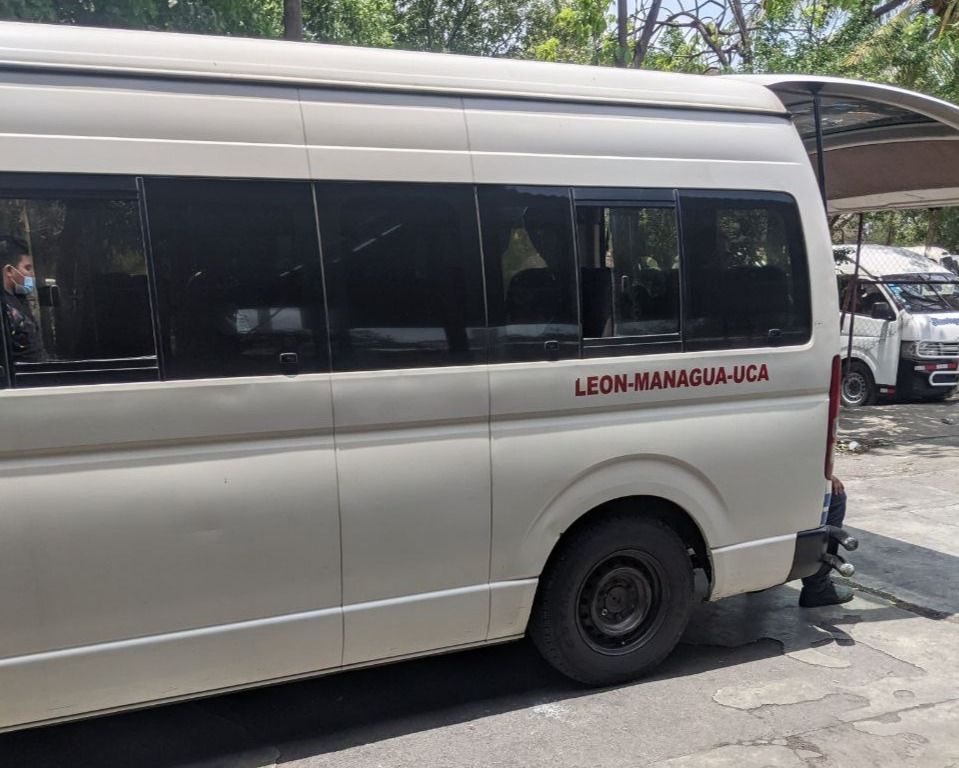
Some travel days, you’re happy to work out the buses and save the money. Others, you look at your bags and decide that being collected from your accommodation sounds rather good. Public transport is worth considering when keeping costs down matters most; a shared shuttle can simplify the journey if its schedule suits you; and a private transfer gives you more scope to arrange the trip around your needs.
For me, luggage and tiredness are usually what tip the balance. I’m much more inclined to pay for an easier journey when I’ve got bags to move around or I’m already feeling worn out. The cheapest option can be perfectly sensible without being the option you want that particular morning.
You can mix things up as you travel. Take an interlocal between cities, try a chicken bus when you have time to enjoy the journey, and book a shuttle when you’d appreciate less organising. Here’s how to choose for journeys around mainland Nicaragua.
Nicaragua transport options at a glance
First, a useful distinction: interlocal microbuses are public transport. They serve routes between towns and cities and are different from shared tourist shuttles, even when the vehicles look similar.
Larger local buses, often called chicken buses, offer a different experience again. And a pre-arranged private transfer is a separate arrangement from finding a taxi on the street.
| Option | Best fit | Main trade-off | Check first |
|---|---|---|---|
| Interlocal microbus | Practical budget travel between towns | More of the journey to organise yourself | Boarding points, connections and luggage |
| Larger local/chicken bus | Budget travel with time for the journey | Can take more navigating; stops and pace vary | Specific route, onward leg and bags |
| Shared tourist shuttle | Fewer connections and decisions | Scheduled departures and shared stops | Pickup coverage, cutoff and total price |
| Pre-arranged private transfer | Specific timing, destinations or group needs | Dedicated transport at a quoted price | Availability, vehicle and inclusions |
When public buses and interlocal microbuses make sense
If you’re travelling reasonably light, have some flexibility and want to keep spending down, give public transport a proper look. You don’t need to book a shuttle for every leg.
But it helps to distinguish two quite different experiences.
Interlocal microbuses: a practical way to get there
I tend to think of interlocals as straightforward everyday transport. You have more to organise than with a shared shuttle, but taking one doesn’t have to be an adventure in itself.
The useful question is how the whole journey fits together. Where do you board? Where do you change? How do you reach your accommodation afterwards?
A connection might mean walking over to the next vehicle, or it might involve crossing a city to another terminal. Those are rather different afternoons. Our Managua bus terminal guide provides context for journeys through the capital; use it alongside the guide for your particular route.
You may meet other travellers, but I wouldn’t choose an interlocal expecting a vehicle full of people following the same itinerary. Its appeal is that it gets you around using the transport people use in everyday life.
Chicken buses: when the journey is part of the appeal
The larger local buses are more of an experience. In my view, they suit someone who has time, enjoys working things out and doesn’t mind a journey taking a little more effort to navigate.
There can be pleasure in that slower pace: watching the places along the way and letting the journey occupy part of your day. It feels different from choosing transport mainly to get the travelling over with.
That doesn’t mean every chicken-bus route is scenic or complicated, or that you need to take one to have a worthwhile visit. Look at the specific service. If it fits your route and you’re curious, it may be part of the trip you enjoy.

A larger local bus, commonly called a chicken bus.
Give yourself time at the terminal
In my experience, finding transport in León and Granada has felt fairly straightforward. Rivas has been more intense, with people approaching to offer taxis; I’ve encountered similar pressure in Managua.
Give yourself time to get your bearings. Know the destination you’re looking for, have the main stages of your route clear, and don’t feel obliged to accept an offer because somebody reached you first. Ask a bus driver or conductor if you’re unsure.
The more rushed you feel, the harder it becomes to decide whether an offer is useful or simply the loudest one available.
When a shared shuttle is worth it
A shared shuttle is appealing when you want fewer things to work out. You book a place on a listed service and organise your day around its pickup and departure arrangements.
For me, that becomes particularly attractive with a large wheeled case. I’ve never had a bad experience with luggage on public transport, but I can understand why handing over a bag or finding space for it feels uncertain when you’re unfamiliar with the system.
Then there’s the final stretch. Finding your accommodation is less appealing when you’re tired and dragging a suitcase behind you. Where a shuttle’s pickup and drop-off coverage suits your addresses, it can remove a useful amount of faffing around.
You’re also paying to arrive with more energy for whatever comes next, whether that’s exploring town or finding somewhere for lunch.
The schedule still needs to work for you. An early pickup might give you more of the day at your destination, but the alarm clock deserves a vote too. Limited departure choices and booking cutoffs can make a shuttle less suitable for a spontaneous travel day.
Shared services may collect or drop off other passengers, so don’t read “shuttle” as “nonstop”. Accommodation pickup also has boundaries.
Sunset Viaje lists shared routes starting in León, Granada and San Jorge, with route-specific schedules, cutoffs and pickup arrangements. Compare the direction you need through our Nicaragua transport hub.

A shared shuttle used for journeys between Granada and León. Vehicles vary by service.
When to ask for a private transfer
Consider a private transfer when a shared departure doesn’t fit, your destination needs a different arrangement, or your group has particular requirements.
Sunset Viaje offers private-transfer enquiries for custom timing and routing, including airport pickups, with quotes subject to availability. Give us your date, pickup address, destination, passenger numbers and luggage so we can establish what is possible.
For a family or group, compare the vehicle quote with the shuttle total for everyone travelling. Divide the private quote by the passenger count if a per-person figure helps, and compare what each option includes.
There is no fixed group size at which private transport becomes cheaper. It may cost more and still be worthwhile because it suits your timing, destination or bags.
Mention requested stops, child seats or other equipment needs when enquiring, and have essential requirements confirmed before booking.
A private transfer can remove connections. It can’t remove traffic. Its value is having a journey arranged around your plans rather than organising each stage yourself.
Three everyday decisions
These hypothetical situations show how the choice changes with the day you’re planning.
Travelling light from León to Granada
You have a manageable backpack, no fixed afternoon plans and a budget you would rather spend elsewhere. Start with the public route.
Our León to Granada guide explains the options and connections. Include getting to the terminal and reaching your accommodation in your comparison.
If the bus works for your day, there’s no need to pay extra.
Tired, carrying bags and ready for an easier journey
You’ve slept badly, your suitcase seems to have gained weight overnight, and moving it between vehicles has lost its appeal.
This is where I’d lean towards paying for convenience. Look at whether a shuttle actually removes the awkward parts of your journey. If you’re travelling with several people, compare a private quote too.
Tell the operator what you’re carrying: a different vehicle only solves the luggage problem if there is suitable space.
Planning a flight connection
Start with your airline’s required airport arrival time and work backwards, allowing a realistic buffer.
Public transport may suit if you have plenty of time and a workable final airport connection. A shared drop-off can be useful when its schedule leaves enough margin. Otherwise, consider a private transfer or staying nearer the airport the night before.
Our León to Managua Airport guide covers those choices.
Sunset Viaje’s published shared airport services are drop-off-only. For collection after an arriving flight, enquire about a private airport pickup.
Checks before booking
Compare the full journey cost, especially when using public transport. The bus fare may be only part of it: getting to the terminal, possible luggage charges and transport to your accommodation can also matter. These extras don’t automatically make a shuttle cheaper, but they belong in the calculation.
Before committing, settle these details:
- Direction and date: does the service cover the journey you need?
- Pickup and drop-off: where will you meet the vehicle and finish?
- Timing: what is the departure time or pickup window, and when does booking close?
- Payment: what is the total, what is due upfront, and how is the balance paid?
- Luggage: can your bags be accommodated, and are there additional charges?
- Connections: have you left enough time for the next stage?
A departure time and a pickup window mean different things. Clarify conflicting information before planning around it. Estimated arrivals are useful, but they are not guarantees of catching a flight or ferry.
Going to Ometepe? Plan the boat as well
A road journey to San Jorge gets you to the mainland port. You still have a lake to cross.
Treat the road transfer, ferry ticket and onward island journey as separate stages. Don’t assume a shuttle includes the boat ticket or a protected connection.
Our Granada to San Jorge and Ometepe guide covers the overall journey. Use the Ometepe ferry guide to plan the crossing and confirm your intended sailing.
Choose your route
Start with your fixed commitments, then consider your budget, bags and energy.
An interlocal can be a practical budget choice. A chicken bus may appeal when you have time for the experience. A shuttle can make a tired travel day easier, while a private transfer is worth considering when you need a more individual arrangement.
You can enjoy figuring out the buses and still be very pleased to see a driver collecting you on another day.
Charlie Crumpton
Co-founder & Travel Designer
Charlie has travelled across Latin America, Europe, and Southeast Asia, and now calls León, Nicaragua home. He's obsessed with the difference between a trip that looks good on paper and one that feels good in real life — the pacing, the energy, the small touches, and the group dynamic.
Which option fits your journey?
Explore the listed routes, or ask us about a journey that needs a different plan. We’re happy to point you towards public transport when it suits.
Explore Nicaragua transport